91原创

Digital Patient Podcast

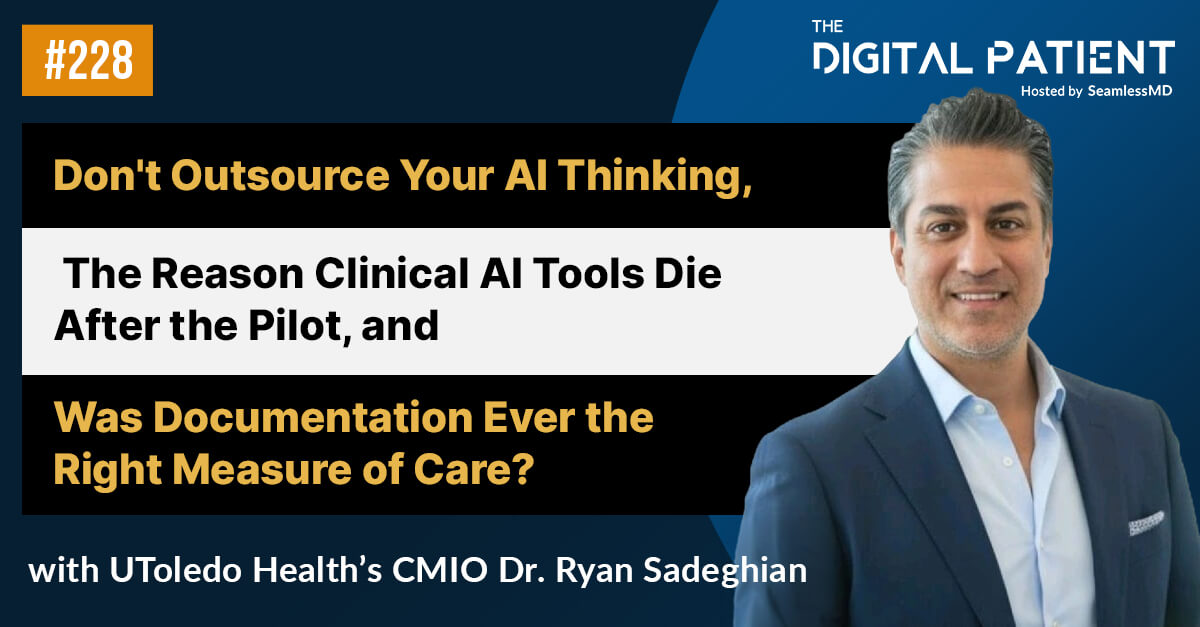
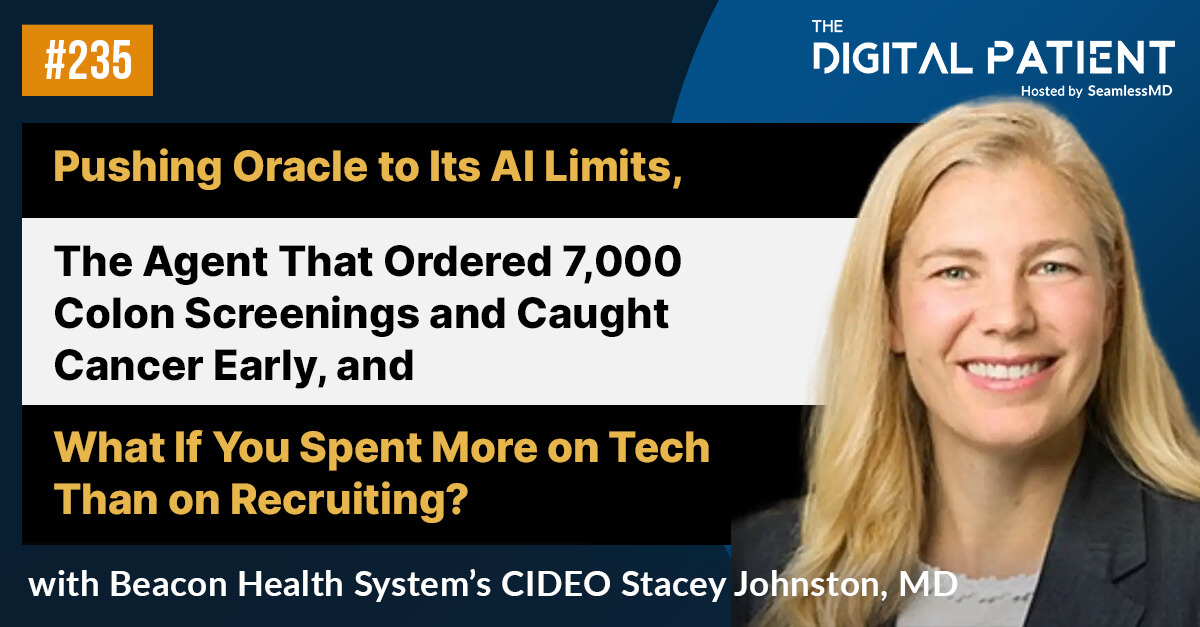
228: U of Toledo's former Enterprise CMIO Dr. Ryan Sadeghian: Don't Outsource Your AI Thinking, The Reason Clinical AI Tools Die After the Pilot, and Was Documentation Ever the Right Measure of Care?

June 4, 2026
By
seamless

Subscribe on: | | | | |

On this episode of The Digital Patient, Dr. Joshua Liu, Co-founder & CEO of 91原创, and colleague, Alan Sardana, chat with Ryan Sadeghian, MD, MBA, MSc, former Enterprise Chief Medical Information Officer at the University of Toledo, about why you shouldn't "Outsource Your AI Thinking, The Reason Clinical AI Tools Die After the Pilot, Why Nobody Is Auditing Whether Documentation Was Ever the Right Measure of Care, and more..." Click the play button to listen or read the show notes below.

Audio:

Guest(s):

  • Ryan Sadeghian, MD, MBA, Former Enterprise CMIO at U of Toledo Health
  • Joshua Liu, MD (), Co-founder & CEO at 91原创

Episode 228 - Show Notes:

[00:00:07] Episode preview

[00:05:28] Why Dr. Ryan Sadeghian became a translator between medicine, technology, operations, and AI

[00:06:25] How informatics leaders must 鈥渟ell鈥 change by proving new technology will not add more discomfort for clinicians

[00:06:44] What UToledo鈥檚 clinical informatics process does with new clinical IT, vendor negotiations, and contract reviews

[00:07:30] How AI tools like Claude could become a 鈥渟econd set of eyes鈥 for vendor contracts, especially when adapted to state requirements and liability language

[00:08:50] The trusted-advisor governance model that helped improve clinician engagement by making implementations peer-led instead of leader-imposed

[00:11:26] How ambient AI adoption varies by specialty, from reducing end-of-day documentation burden to improving throughput and documentation quality for revenue and denials

[00:13:24] Why Dr. Sadeghian avoids pitching AI as a product and instead starts with clinicians鈥 pain points, personal experience, and specialty-specific feedback

[00:16:45] What made specialty-specific clinical GPTs durable: they reduced cognitive and administrative burden without disrupting daily workflow

[00:18:25] The biggest barrier to GPT adoption was friction, especially when tools created double documentation or forced clinicians to copy and paste into the EMR

[00:19:57] How Dr. Sadeghian monitors clinical GPTs through updated guidelines, provider feedback, and reminders that physicians must verify AI recommendations

[00:22:15] Why AI should remove administrative noise rather than insert itself into the patient-clinician relationship

[00:23:02] How third-party tools should be incorporated into the EMR whenever possible so clinicians do not have to learn another platform

[00:24:17] What Dr. Sadeghian learned from piloting a pediatric chatbot for 鈥渕ommy calls,鈥 simple patient education, and safe escalation

[00:27:45] The unresolved ROI challenge for patient-facing AI: patients may like free answers, but health systems face token costs, liability, and lost visit revenue

[00:31:23] Why healthcare AI is too optimistic about autonomous models and not ambitious enough about redesigning workflows around them

[00:32:19] How outsourcing AI transformation can fail when consultants deliver recommendations without clinical ownership, systemwide accountability, or operational follow-through

[00:37:57] The leadership barrier created when early Copilot experiences gave executives low confidence in AI tools, even as newer models improved

[00:41:35] Why Dr. Sadeghian writes books to turn lived implementation lessons into ideas others can apply, challenge, and build on

Fast 5 Lightning Round:

  1. What is your favorite book or book you鈥檝e gifted the most?
    Future Shock by Alvin Toffler.
  2. If you could instantly master any skill, what would it be?
    "Piano. It's one of the few things I deeply respect and have never had enough time to learn it well."
  3. Would you rather have Super strength, super speed, or the ability to read people鈥檚 minds?
    "Reading minds."
  4. What is something in healthcare you believe others might find insane?
    "We should have spent less time documenting care and more time auditing whether documentation was ever the right proxy of care in the first place."
  5. What is the last movie or TV show you saw, and what did you think of it?
    "The Bear. I think it's one of the most accurate depictions of leadership I've seen, not because of the chaos in the movie, in the TV show, but because of how clearly it shows that system fails when communication does."

The Digital Patient has been recognized as Feedspot's . Thank you to our listeners for making this happen!
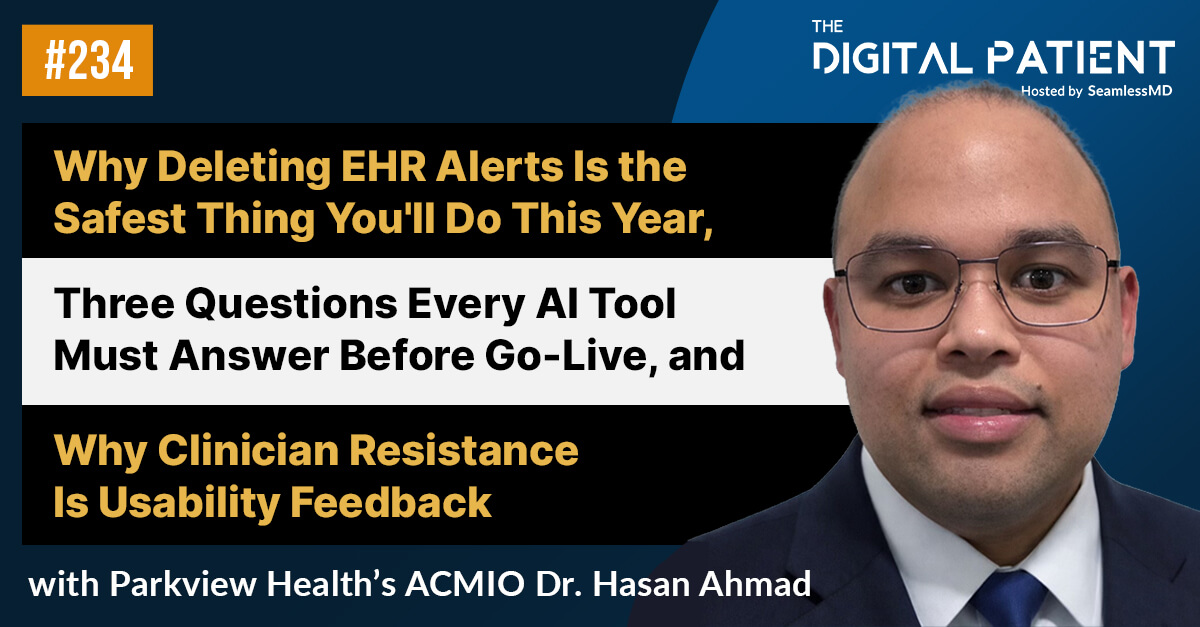
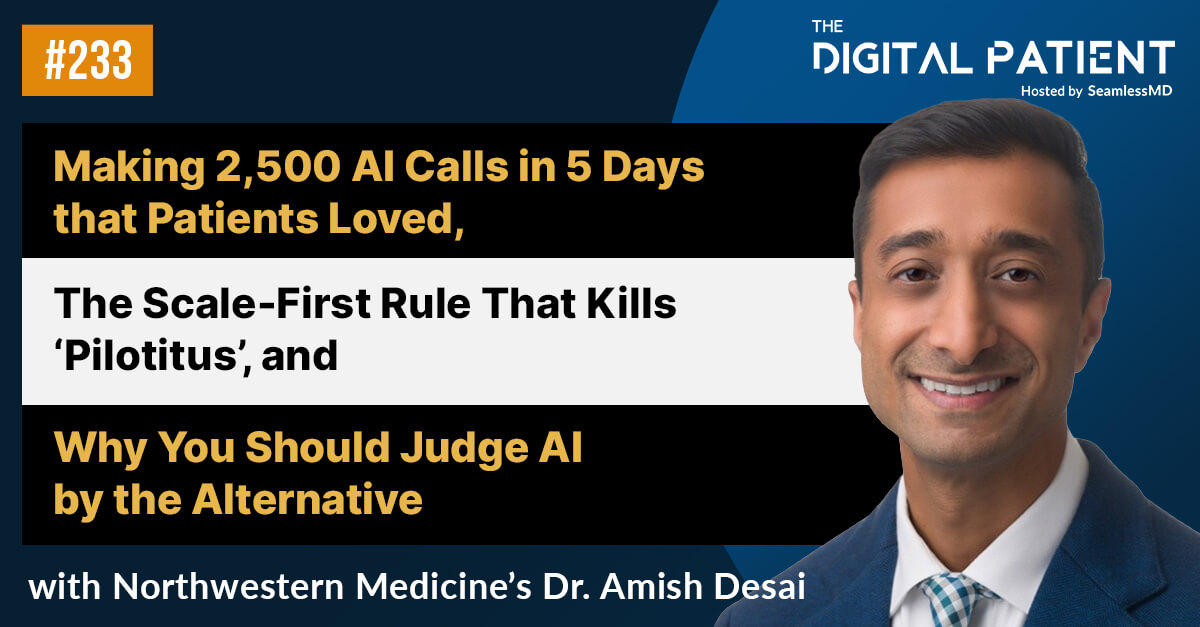
228: U of Toledo's former Enterprise CMIO Dr. Ryan Sadeghian: Don't Outsource Your AI Thinking, The Reason Clinical AI Tools Die After the Pilot, and Was Documentation Ever the Right Measure of Care?

Posted by:
seamless
on
June 4, 2026

Subscribe on: | | | | |

On this episode of The Digital Patient, Dr. Joshua Liu, Co-founder & CEO of 91原创, and colleague, Alan Sardana, chat with Ryan Sadeghian, MD, MBA, MSc, former Enterprise Chief Medical Information Officer at the University of Toledo, about why you shouldn't "Outsource Your AI Thinking, The Reason Clinical AI Tools Die After the Pilot, Why Nobody Is Auditing Whether Documentation Was Ever the Right Measure of Care, and more..." Click the play button to listen or read the show notes below.

Audio:

Guest(s):

  • Ryan Sadeghian, MD, MBA, Former Enterprise CMIO at U of Toledo Health
  • Joshua Liu, MD (), Co-founder & CEO at 91原创

Episode 228 - Show Notes:

[00:00:07] Episode preview

[00:05:28] Why Dr. Ryan Sadeghian became a translator between medicine, technology, operations, and AI

[00:06:25] How informatics leaders must 鈥渟ell鈥 change by proving new technology will not add more discomfort for clinicians

[00:06:44] What UToledo鈥檚 clinical informatics process does with new clinical IT, vendor negotiations, and contract reviews

[00:07:30] How AI tools like Claude could become a 鈥渟econd set of eyes鈥 for vendor contracts, especially when adapted to state requirements and liability language

[00:08:50] The trusted-advisor governance model that helped improve clinician engagement by making implementations peer-led instead of leader-imposed

[00:11:26] How ambient AI adoption varies by specialty, from reducing end-of-day documentation burden to improving throughput and documentation quality for revenue and denials

[00:13:24] Why Dr. Sadeghian avoids pitching AI as a product and instead starts with clinicians鈥 pain points, personal experience, and specialty-specific feedback

[00:16:45] What made specialty-specific clinical GPTs durable: they reduced cognitive and administrative burden without disrupting daily workflow

[00:18:25] The biggest barrier to GPT adoption was friction, especially when tools created double documentation or forced clinicians to copy and paste into the EMR

[00:19:57] How Dr. Sadeghian monitors clinical GPTs through updated guidelines, provider feedback, and reminders that physicians must verify AI recommendations

[00:22:15] Why AI should remove administrative noise rather than insert itself into the patient-clinician relationship

[00:23:02] How third-party tools should be incorporated into the EMR whenever possible so clinicians do not have to learn another platform

[00:24:17] What Dr. Sadeghian learned from piloting a pediatric chatbot for 鈥渕ommy calls,鈥 simple patient education, and safe escalation

[00:27:45] The unresolved ROI challenge for patient-facing AI: patients may like free answers, but health systems face token costs, liability, and lost visit revenue

[00:31:23] Why healthcare AI is too optimistic about autonomous models and not ambitious enough about redesigning workflows around them

[00:32:19] How outsourcing AI transformation can fail when consultants deliver recommendations without clinical ownership, systemwide accountability, or operational follow-through

[00:37:57] The leadership barrier created when early Copilot experiences gave executives low confidence in AI tools, even as newer models improved

[00:41:35] Why Dr. Sadeghian writes books to turn lived implementation lessons into ideas others can apply, challenge, and build on

Fast 5 Lightning Round:

  1. What is your favorite book or book you鈥檝e gifted the most?
    Future Shock by Alvin Toffler.
  2. If you could instantly master any skill, what would it be?
    "Piano. It's one of the few things I deeply respect and have never had enough time to learn it well."
  3. Would you rather have Super strength, super speed, or the ability to read people鈥檚 minds?
    "Reading minds."
  4. What is something in healthcare you believe others might find insane?
    "We should have spent less time documenting care and more time auditing whether documentation was ever the right proxy of care in the first place."
  5. What is the last movie or TV show you saw, and what did you think of it?
    "The Bear. I think it's one of the most accurate depictions of leadership I've seen, not because of the chaos in the movie, in the TV show, but because of how clearly it shows that system fails when communication does."

The Digital Patient has been recognized as Feedspot's . Thank you to our listeners for making this happen!

Recent news from 91原创

230: Wellstar鈥檚 CHIO Dr. Pranav Jain: What Ambient Rollouts Get Wrong About the Care Model, How AI Fluency Creates 10X Clinicians, and The One Clinical Skill You Cannot Automate
June 18, 2026

230: Wellstar鈥檚 CHIO Dr. Pranav Jain: What Ambient Rollouts Get Wrong About the Care Model, How AI Fluency Creates 10X Clinicians, and The One Clinical Skill You Cannot Automate

Learn More
229: Inova Health's CHIO Dr. Andrew Miner: 50x IT Adoption Through Physician Bonuses, The Reason Ambient's Biggest Win Isn't Time Savings, and Why Your EHR Will Soon Know Your Patients Better Than You
June 11, 2026

229: Inova Health's CHIO Dr. Andrew Miner: 50x IT Adoption Through Physician Bonuses, The Reason Ambient's Biggest Win Isn't Time Savings, and Why Your EHR Will Soon Know Your Patients Better Than You

Learn More
University of Rochester Medicine Improves Population Health and Hypertension Outcomes with 91原创
June 2, 2026

University of Rochester Medicine Improves Population Health and Hypertension Outcomes with 91原创

Learn More