91ԭ

Digital Patient Podcast

TDP 100: Divurgent's CEO, Edward Marx: How a personal health scare sparked innovation, Using empathy to fuel digital health transformation & Creating “listening posts” with clinical champions

April 13, 2023
By
seamless

Subscribe on: | | | | |

On the 100th episode of "The Digital Patient" podcast, hosts Alan Sardana & Dr. Joshua Liu speak with Edward Marx, CEO at Divurgent, about "How a personal health scare sparked innovation, Using empathy to fuel digital health transformation, Creating “listening posts” with clinical champions, and more..." Click the play button to listen or read the show notes below.

Audio:

Video:

Guest(s):

  • Edward Marx (), CEO at Divurgent
  • Dr. Joshua Liu (), Co-founder & CEO at 91ԭ

Episode 100 - Show Notes:

[00:00:00] Introducing Edward Marx, CEO at Divurgent, and former CIO at organizations such as Cleveland Clinic, The Advisory Board 91ԭ, and Tech Mahindra;

[00:01:35] Mr. Marx's healthcare journey started as a combat medic in the Army. At 16, he worked as a janitor at Peterson Air Force Base Medical Facility and eventually became an anesthesia tech. He then worked as a project manager for the operating room and developed his skills in physician relations;

[00:06:32] How a healthcare scare sparked innovation: Mr. Marx's second career milestone was when his child was born with life-threatening diseases. He used his IT knowledge to connect the neonatologist with the pediatrician caring for his daughter remotely;

[00:13:37] Embrace your authority as a leader: Mr. Marx encourages young leaders to embrace their authority and not be shy when answering a call. As a CEO, he still follows this advice and believes it's essential to embrace your authority and vision;

[00:15:43] Personal encounters with healthcare: Despite being a CIO in healthcare, Mr. Marx's personal healthcare experiences were suboptimal, inspiring him and Chris Ross to write a book to help consumers navigate their healthcare journey;

[00:17:51] Have a digital strategy or be disintermediated: Mr. Marx warns that healthcare systems without digital strategies may face disintermediation by payers, big tech, pharma, and retail, leading to mergers and acquisitions. Convenience and digital tools are important for staying competitive, but smaller systems may struggle with investment;

[00:20:42] Leveraging cross-industry collaboration for innovation: Two strategies Mr. Marx recommends for healthcare organizations to spur innovation today:

  1. Spend a day visiting companies outside healthcare whose consumer experience you like; Exchange ideas, and
  2. Meet with fellow healthcare systems to do the same.


[00:23:00] Getting outside the IT institute: How Mr. Marx worked each Wednesday from 5:00 AM to 1:00PM as an anesthesia tech to shadow the frontline workers, better understand medical staff and their workflows, and to inform decisions for innovation;

[00:29:15] Align IT with business goals for success: Why Mr. Marx advocates aligning IT initiatives with business objectives, citing how it resulted in easier budget approvals. This approach leads to customer-centric budgeting, greater executive investment, and requires a good understanding of the business;

[00:34:29] Importance of hiring right talent in healthcare: Mr. Marx recounts advice given to him by a former boss who emphasized the need for the right people in the right place and how he’s carried this philosophy forward at Divurgent, which highly values talent for its advisory services;

[00:37:09] Importance of culture in retaining good talent: Mr. Marx emphasizes that an organization's culture sets the tone for retaining the right people and affects the customer experience. Divurgent has values following the acronym "ELITE," which is stated at every meeting to keep the culture at the forefront of their minds;

[00:39:07] Pockets of brilliance to enterprises of excellence: Mr. Marx discusses how Cleveland Clinic moved from "pockets of brilliance" to an "enterprise of excellence." They faced a problem with patients having to use different portals for different disease states and wanted the same engagement capability across all departments and service lines;

[00:47:13] Creating clinical champion “listening posts”: Mr. Marx explains how he used to create “listening posts” of physicians, nurses, and clinical champions to communicate with him effectively, to ensure he was always in the know. Champions would formally work within IT, receiving small stipends for their efforts;

[00:47:30] Fostering communication and trust: Mr. Marx would proactively create opportunities for clinicians to connect with him outside of work, such as wine nights or morning walks. This approach ensures that he always had an ear for them, and nobody could say he wasn’t listening;

Fast 5 / Lightning Round:

  1. What is your favorite book or book you’ve gifted the most?
    "The Bible"
  1. Who is a person–dead or alive–you’d love to meet?
    "My grandmother on my dad's side who helped his dad escape from a concentration camp"
  1. Would you rather have Super strength, super speed, or the ability to read people’s minds?
    "Super speed"
  1. What is something in healthcare you believe that others might find insane?
    "Our payment structure."
  1. If you could travel back in time to any event or moment, what would it be and why?
    "I had a really interesting moment with my mom when I was 5. I wish I could back then and relive it."

TDP 100: Divurgent's CEO, Edward Marx: How a personal health scare sparked innovation, Using empathy to fuel digital health transformation & Creating “listening posts” with clinical champions

Posted by:
seamless
on
April 13, 2023

Subscribe on: | | | | |

On the 100th episode of "The Digital Patient" podcast, hosts Alan Sardana & Dr. Joshua Liu speak with Edward Marx, CEO at Divurgent, about "How a personal health scare sparked innovation, Using empathy to fuel digital health transformation, Creating “listening posts” with clinical champions, and more..." Click the play button to listen or read the show notes below.

Audio:

Video:

Guest(s):

  • Edward Marx (), CEO at Divurgent
  • Dr. Joshua Liu (), Co-founder & CEO at 91ԭ

Episode 100 - Show Notes:

[00:00:00] Introducing Edward Marx, CEO at Divurgent, and former CIO at organizations such as Cleveland Clinic, The Advisory Board 91ԭ, and Tech Mahindra;

[00:01:35] Mr. Marx's healthcare journey started as a combat medic in the Army. At 16, he worked as a janitor at Peterson Air Force Base Medical Facility and eventually became an anesthesia tech. He then worked as a project manager for the operating room and developed his skills in physician relations;

[00:06:32] How a healthcare scare sparked innovation: Mr. Marx's second career milestone was when his child was born with life-threatening diseases. He used his IT knowledge to connect the neonatologist with the pediatrician caring for his daughter remotely;

[00:13:37] Embrace your authority as a leader: Mr. Marx encourages young leaders to embrace their authority and not be shy when answering a call. As a CEO, he still follows this advice and believes it's essential to embrace your authority and vision;

[00:15:43] Personal encounters with healthcare: Despite being a CIO in healthcare, Mr. Marx's personal healthcare experiences were suboptimal, inspiring him and Chris Ross to write a book to help consumers navigate their healthcare journey;

[00:17:51] Have a digital strategy or be disintermediated: Mr. Marx warns that healthcare systems without digital strategies may face disintermediation by payers, big tech, pharma, and retail, leading to mergers and acquisitions. Convenience and digital tools are important for staying competitive, but smaller systems may struggle with investment;

[00:20:42] Leveraging cross-industry collaboration for innovation: Two strategies Mr. Marx recommends for healthcare organizations to spur innovation today:

  1. Spend a day visiting companies outside healthcare whose consumer experience you like; Exchange ideas, and
  2. Meet with fellow healthcare systems to do the same.


[00:23:00] Getting outside the IT institute: How Mr. Marx worked each Wednesday from 5:00 AM to 1:00PM as an anesthesia tech to shadow the frontline workers, better understand medical staff and their workflows, and to inform decisions for innovation;

[00:29:15] Align IT with business goals for success: Why Mr. Marx advocates aligning IT initiatives with business objectives, citing how it resulted in easier budget approvals. This approach leads to customer-centric budgeting, greater executive investment, and requires a good understanding of the business;

[00:34:29] Importance of hiring right talent in healthcare: Mr. Marx recounts advice given to him by a former boss who emphasized the need for the right people in the right place and how he’s carried this philosophy forward at Divurgent, which highly values talent for its advisory services;

[00:37:09] Importance of culture in retaining good talent: Mr. Marx emphasizes that an organization's culture sets the tone for retaining the right people and affects the customer experience. Divurgent has values following the acronym "ELITE," which is stated at every meeting to keep the culture at the forefront of their minds;

[00:39:07] Pockets of brilliance to enterprises of excellence: Mr. Marx discusses how Cleveland Clinic moved from "pockets of brilliance" to an "enterprise of excellence." They faced a problem with patients having to use different portals for different disease states and wanted the same engagement capability across all departments and service lines;

[00:47:13] Creating clinical champion “listening posts”: Mr. Marx explains how he used to create “listening posts” of physicians, nurses, and clinical champions to communicate with him effectively, to ensure he was always in the know. Champions would formally work within IT, receiving small stipends for their efforts;

[00:47:30] Fostering communication and trust: Mr. Marx would proactively create opportunities for clinicians to connect with him outside of work, such as wine nights or morning walks. This approach ensures that he always had an ear for them, and nobody could say he wasn’t listening;

Fast 5 / Lightning Round:

  1. What is your favorite book or book you’ve gifted the most?
    "The Bible"
  1. Who is a person–dead or alive–you’d love to meet?
    "My grandmother on my dad's side who helped his dad escape from a concentration camp"
  1. Would you rather have Super strength, super speed, or the ability to read people’s minds?
    "Super speed"
  1. What is something in healthcare you believe that others might find insane?
    "Our payment structure."
  1. If you could travel back in time to any event or moment, what would it be and why?
    "I had a really interesting moment with my mom when I was 5. I wish I could back then and relive it."

Recent news from 91ԭ

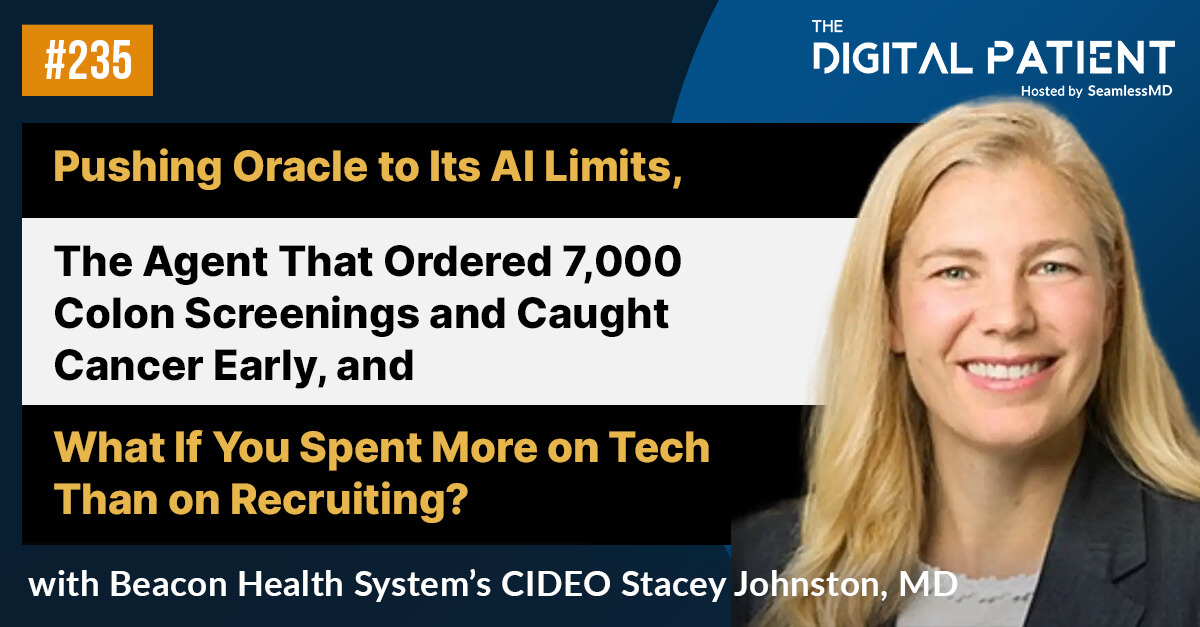
235: Beacon's CIDEO Dr. Stacey Johnston: Pushing Oracle to Its AI Limits, The Agent That Ordered 7,000 Colon Screenings and Caught Cancer Early, and What If You Spent More on Tech Than on Recruiting?
August 20, 2026

235: Beacon's CIDEO Dr. Stacey Johnston: Pushing Oracle to Its AI Limits, The Agent That Ordered 7,000 Colon Screenings and Caught Cancer Early, and What If You Spent More on Tech Than on Recruiting?

Learn More
234: Parkview's ACMIO Dr. Hasan Ahmad: Why Deleting EHR Alerts Is the Safest Thing You'll Do This Year, Three Questions Every AI Tool Must Answer Before Go-Live, and Why Resistance Is Usability Feedback
August 13, 2026

234: Parkview's ACMIO Dr. Hasan Ahmad: Why Deleting EHR Alerts Is the Safest Thing You'll Do This Year, Three Questions Every AI Tool Must Answer Before Go-Live, and Why Resistance Is Usability Feedback

Learn More
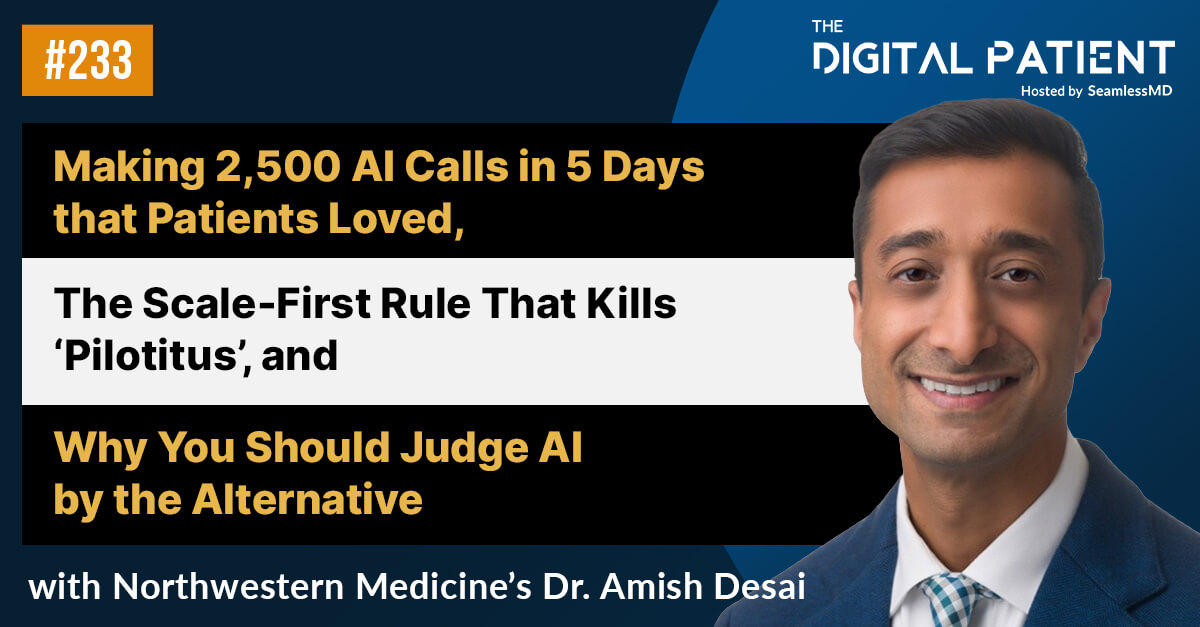
233: Northwestern's CMO, Pop Health Dr. Amish Desai: Making 2,500 AI Calls in 5 Days that Patients Loved,  The Scale-First Rule That Kills Pilotitus, and Why You Should Judge AI by the Alternative
July 23, 2026

233: Northwestern's CMO, Pop Health Dr. Amish Desai: Making 2,500 AI Calls in 5 Days that Patients Loved,  The Scale-First Rule That Kills Pilotitus, and Why You Should Judge AI by the Alternative

Learn More