91ԭ

Healthcare News & Views

How to Implement Surgical Remote Monitoring: Why Surgical Remote Monitoring?

June 3, 2021
By
seamless

COVID-19 cases overwhelmed hospitals throughout the pandemic, leading to the suspension of a wide range of non-emergency surgeries to spare beds for these patients. As a result, the surgery backlog has dramatically increased and there are growing concerns on how to catch up efficiently. In addition, to reduce the risk of contracting COVID-19 from hospitals, providers have been under pressure to reduce surgical LOS and keep patients healthy at home.

Looming in the not-so-distant future and adding further complexity are mandatory bundled payment programs promoting better patient care at lower costs.

Backlog and bundled payments aside, surgery is often a confusing and overwhelming process for patients. Patients are learning complex pre- and post-surgery instructions, managing anxiety and dealing with stress – often for the first time.

Providers often feel as if they are sending patients into a blackhole, especially after discharge. Although providers hope for patients to have a straightforward recovery, the reality is that:

• 30-day postoperative complications have been observed as high as 43.5% ¹
• 30-day surgical readmissions have been observed as high as 32.5% ²

These challenges are heightened during COVID-19 as hospitals face bed capacity issues and are under pressure to decrease the surgical backlog and discharge surgical patients sooner - all while ensuring patients recover safely at home.

Surgical Remote Monitoring represents a scalable way for providers to stay connected with patients pre and post-operatively, thereby increasing confidence for earlier discharge and catch complications before they escalate to ED visits or readmissions.

Surgical Remote Monitoring can help hospitals reduce surgical backlogs, increase throughput and improve patient outcomes. Many hospitals have successfully implemented Surgical Remote Monitoring with excellent results, including:

³


For more details on how Surgical Remote Monitoring can help you achieve similar results:

Check out our on “How to Implement Surgical Remote Monitoring” where we discuss the topic in depth (Timestamp: 0:00-8:35).

Make sure to check out the full whitepaper .

1 Tevis SE, Kennedy GD. Postoperative complications and implications on patient-centered outcomes. J Surg Res. 2013;181(1):106-113.
2 Wiseman JT, Guzman AM, Fernandes-Taylor S, Engelbert TL, Saunders RS, Kent KC. General and vascular surgery readmissions: a systematic review. J Am Coll Surg. 2014;219(3):552-69.e2.
3 Keng CJS, Goriawala A, Rashid S, et al. Home to Stay: An Integrated Monitoring System Using a Mobile App to Support Patients at Home Following Colorectal Surgery. Journal of Patient Experience. December 2020:1241-1246.
4 Theiss, L., Wood, L., Xie, R., dos Santos Marques, I. C., Gunnells, D., Hardiman, K. M., Kennedy, G. D., & Chu, D. I. (2020). Patient Engage- ment Technologies (PETs) Reduce the Costs of Index Surgical Encounters. Journal of the American College of Surgeons, 231(4), e105.
5 TB Newswatch. (2021, January 29). New Interactive Digital Tool Improves Access to Patient Care. YouTube.
6 Wiseman JT, Guzman AM, Fernandes-Taylor S, Engelbert TL, Saunders RS, Kent KC. General and vascular surgery readmissions: a systematic review. J Am Coll Surg. 2014;219(3):552-69.e2.
7 Gomez, R., & Sardana, A. (2020, September 28). St. Francis Hospital Keeps Cardiac Patients Safe During COVID-19 with 91ԭ, Cuts Readmission Rate by 45% [Press release].
How to Implement Surgical Remote Monitoring: Why Surgical Remote Monitoring?

Posted by:
seamless
on
June 3, 2021

COVID-19 cases overwhelmed hospitals throughout the pandemic, leading to the suspension of a wide range of non-emergency surgeries to spare beds for these patients. As a result, the surgery backlog has dramatically increased and there are growing concerns on how to catch up efficiently. In addition, to reduce the risk of contracting COVID-19 from hospitals, providers have been under pressure to reduce surgical LOS and keep patients healthy at home.

Looming in the not-so-distant future and adding further complexity are mandatory bundled payment programs promoting better patient care at lower costs.

Backlog and bundled payments aside, surgery is often a confusing and overwhelming process for patients. Patients are learning complex pre- and post-surgery instructions, managing anxiety and dealing with stress – often for the first time.

Providers often feel as if they are sending patients into a blackhole, especially after discharge. Although providers hope for patients to have a straightforward recovery, the reality is that:

• 30-day postoperative complications have been observed as high as 43.5% ¹
• 30-day surgical readmissions have been observed as high as 32.5% ²

These challenges are heightened during COVID-19 as hospitals face bed capacity issues and are under pressure to decrease the surgical backlog and discharge surgical patients sooner - all while ensuring patients recover safely at home.

Surgical Remote Monitoring represents a scalable way for providers to stay connected with patients pre and post-operatively, thereby increasing confidence for earlier discharge and catch complications before they escalate to ED visits or readmissions.

Surgical Remote Monitoring can help hospitals reduce surgical backlogs, increase throughput and improve patient outcomes. Many hospitals have successfully implemented Surgical Remote Monitoring with excellent results, including:

³


For more details on how Surgical Remote Monitoring can help you achieve similar results:

Check out our on “How to Implement Surgical Remote Monitoring” where we discuss the topic in depth (Timestamp: 0:00-8:35).

Make sure to check out the full whitepaper .

1 Tevis SE, Kennedy GD. Postoperative complications and implications on patient-centered outcomes. J Surg Res. 2013;181(1):106-113.
2 Wiseman JT, Guzman AM, Fernandes-Taylor S, Engelbert TL, Saunders RS, Kent KC. General and vascular surgery readmissions: a systematic review. J Am Coll Surg. 2014;219(3):552-69.e2.
3 Keng CJS, Goriawala A, Rashid S, et al. Home to Stay: An Integrated Monitoring System Using a Mobile App to Support Patients at Home Following Colorectal Surgery. Journal of Patient Experience. December 2020:1241-1246.
4 Theiss, L., Wood, L., Xie, R., dos Santos Marques, I. C., Gunnells, D., Hardiman, K. M., Kennedy, G. D., & Chu, D. I. (2020). Patient Engage- ment Technologies (PETs) Reduce the Costs of Index Surgical Encounters. Journal of the American College of Surgeons, 231(4), e105.
5 TB Newswatch. (2021, January 29). New Interactive Digital Tool Improves Access to Patient Care. YouTube.
6 Wiseman JT, Guzman AM, Fernandes-Taylor S, Engelbert TL, Saunders RS, Kent KC. General and vascular surgery readmissions: a systematic review. J Am Coll Surg. 2014;219(3):552-69.e2.
7 Gomez, R., & Sardana, A. (2020, September 28). St. Francis Hospital Keeps Cardiac Patients Safe During COVID-19 with 91ԭ, Cuts Readmission Rate by 45% [Press release].
Recent news from 91ԭ

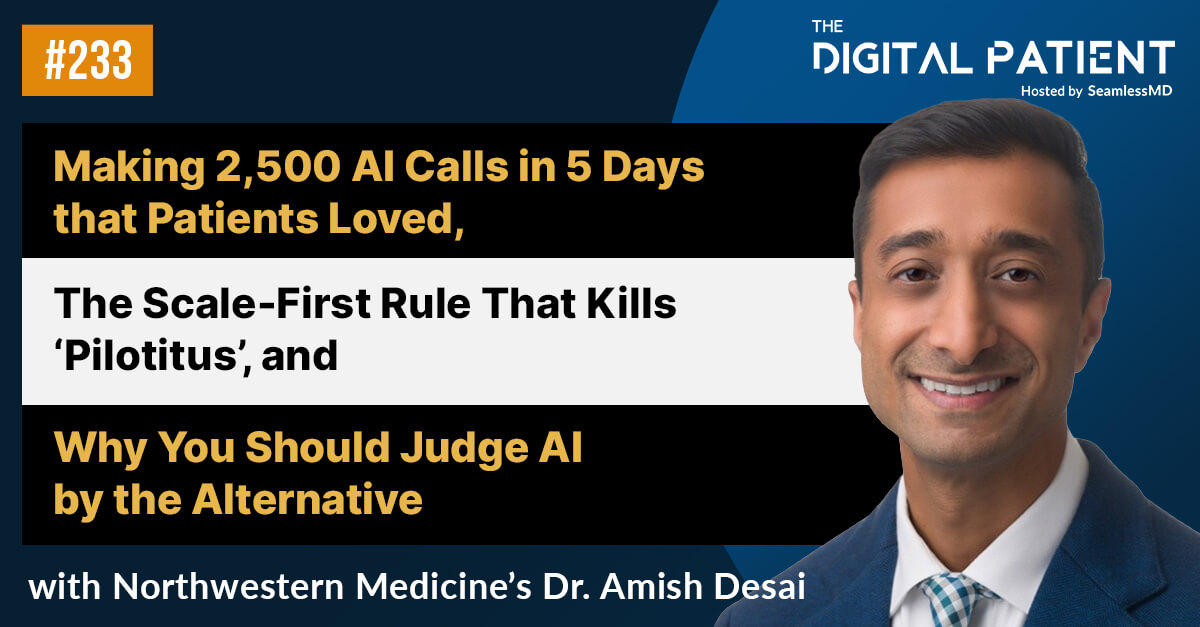
235: Beacon's CIDEO Dr. Stacey Johnston: Pushing Oracle to Its AI Limits, The Agent That Ordered 7,000 Colon Screenings and Caught Cancer Early, and What If You Spent More on Tech Than on Recruiting?
August 20, 2026

235: Beacon's CIDEO Dr. Stacey Johnston: Pushing Oracle to Its AI Limits, The Agent That Ordered 7,000 Colon Screenings and Caught Cancer Early, and What If You Spent More on Tech Than on Recruiting?

Learn More
234: Parkview's ACMIO Dr. Hasan Ahmad: Why Deleting EHR Alerts Is the Safest Thing You'll Do This Year, Three Questions Every AI Tool Must Answer Before Go-Live, and Why Resistance Is Usability Feedback
August 13, 2026

234: Parkview's ACMIO Dr. Hasan Ahmad: Why Deleting EHR Alerts Is the Safest Thing You'll Do This Year, Three Questions Every AI Tool Must Answer Before Go-Live, and Why Resistance Is Usability Feedback

Learn More
233: Northwestern's CMO, Pop Health Dr. Amish Desai: Making 2,500 AI Calls in 5 Days that Patients Loved,  The Scale-First Rule That Kills Pilotitus, and Why You Should Judge AI by the Alternative
July 23, 2026

233: Northwestern's CMO, Pop Health Dr. Amish Desai: Making 2,500 AI Calls in 5 Days that Patients Loved,  The Scale-First Rule That Kills Pilotitus, and Why You Should Judge AI by the Alternative

Learn More